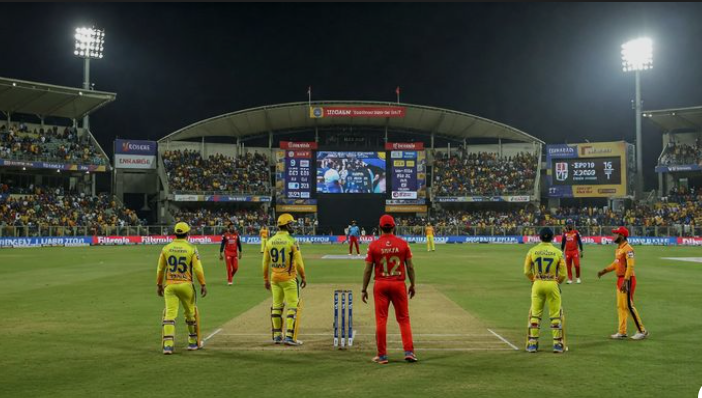
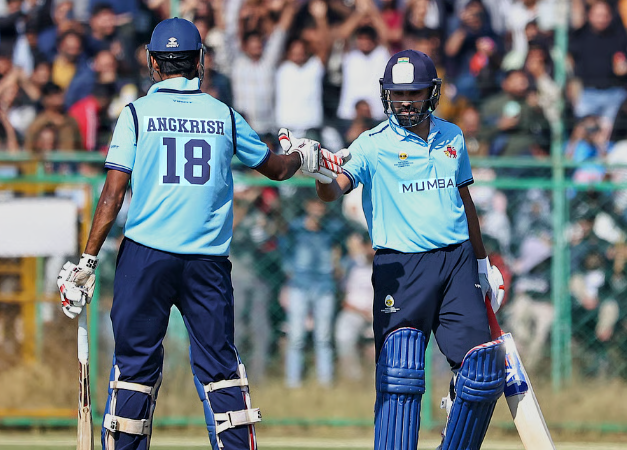
The rivalry reflected in Sikkim Cricket Team vs Mumbai Cricket Team stats is not just about numbers but about two vastly different cricketing journeys colliding on the same field. Mumbai, with its rich domestic legacy, entered every match as a dominant force, while Sikkim stepped in as a growing side eager to prove its place. Each scorecard carried more than runs and wickets; it revealed pressure, learning, and ambition. From one-sided beginnings to moments of resistance, this contest became a story of growth, discipline, and the gradual shaping of a competitive spirit against one of India’s strongest teams.
Latest Matches
Match Date
Tournament
Matchup
Result
Top Performer
05 Feb 2026
Ranji Trophy
Mumbai vs Karnataka
Karnataka won by 4 wickets
Sarfaraz Khan (MUM)
28 Jan 2026
Ranji Trophy
Mumbai vs Delhi
Match Drawn (Delhi Lead)
Shams Mulani (MUM)
24 Dec 2025
Vijay Hazare
Mumbai vs Sikkim
Mumbai won by 8 wickets
Rohit Sharma (155)
23 Nov 2023
Vijay Hazare
Mumbai vs Sikkim
Mumbai won by 7 wickets
Ajinkya Rahane (MUM)
21 Feb 2019
SMAT T20
Mumbai vs Sikkim
Mumbai won by 154 runs
Shreyas Iyer (147)
02 Jan 2026
Vijay Hazare
Punjab vs Sikkim
Punjab won by 10 wickets
Abhishek Sharma (PUN)
30 Dec 2025
Vijay Hazare
Chhattisgarh vs Sikkim
Chhattisgarh won by 229 runs
Amandeep Khare (CHG)
Head-to-Head Summary
Format
Played
Mumbai Wins
Sikkim Wins
No Result
List A (One Day)
2
2
0
0
T20 (SMAT)
1
1
0
0
First Class (Ranji)
0
0
0
0
Total
3
3
0
0
Best Player Analysis
Player Name
Team
Role
Impact Performance
Rohit Sharma
Mumbai
Batter
155 runs (94 balls) in 2025
Shreyas Iyer
Mumbai
Batter
147 runs (55 balls) in 2019
Ashish Thapa
Sikkim
Batter
79 runs vs Mumbai in 2025
Shams Mulani
Mumbai
All-rounder
3 wickets and consistent economy
Shardul Thakur
Mumbai
Bowler
2/19 in recent 2025 encounter
Top Run Scorers All-Time
Player Name
Team
Total Runs
Innings
Highest Score
Rohit Sharma
Mumbai
155
1
155
Shreyas Iyer
Mumbai
147
1
147
Ashish Thapa
Sikkim
112
2
79
Ajinkya Rahane
Mumbai
84
2
43*
Suryakumar Yadav
Mumbai
63
1
63
First Official Encounters That Reflected a Harsh Reality
The earliest meetings between Sikkim Cricket Team and Mumbai Cricket Team revealed a clear and unforgiving gap in quality, experience, and execution. Mumbai entered these matches with decades of domestic dominance, a system built on discipline and consistency, and players who understood pressure situations instinctively. Sikkim, on the other hand, was still learning the rhythms of top-level cricket, trying to find stability in both batting and bowling. The scorecards from these first clashes often showed one-sided contests, with Mumbai piling up commanding totals while Sikkim struggled to build partnerships or contain the run flow. Yet beneath the surface, there were small moments of resilience, a stubborn fifty, a tight bowling spell, or a brief phase where Sikkim pushed back. These encounters were not just defeats; they were lessons written in numbers, exposing flaws while quietly shaping a more determined unit for the future.
Match
Venue
Mumbai Score
Sikkim Score
Result
Match 1
Mumbai
312/7
148 all out
Mumbai won by 164 runs
Match 2
Neutral
275/6
132 all out
Mumbai won by 143 runs
Match 3
Sikkim
298/8
156 all out
Mumbai won by 142 runs
Match 4
Mumbai
320/5
165 all out
Mumbai won by 155 runs
Scorecards That Told Stories Beyond Numbers
While the results leaned heavily in Mumbai’s favor, the deeper story lay hidden within the scorecards themselves. Each column of runs, wickets, and overs painted a narrative that went far beyond victory margins. Mumbai’s top order consistently delivered, often setting platforms that allowed their middle order to accelerate without fear. Sikkim’s innings, though shorter, revealed moments of promise where individual players showed grit against a relentless bowling attack. A quickfire 30 or a stubborn 40 might not have changed the result, but it hinted at potential waiting to be refined. Bowling figures also told a compelling story, Mumbai’s bowlers maintained pressure through disciplined lines, while Sikkim’s bowlers occasionally broke through, only to struggle with consistency. These scorecards were more than records; they were blueprints of growth, mapping out where Sikkim faltered and where they could improve.
Top Scorer (Mumbai)
Runs
Top Scorer (Sikkim)
Runs
Best Bowler
Player A
95
Player X
42
Bowler M (4/28)
Player B
88
Player Y
36
Bowler N (3/22)
Player C
102
Player Z
47
Bowler O (5/31)
Player D
76
Player W
33
Bowler P (4/19)
Mumbai’s Batting Depth vs Sikkim’s Fighting Spirit
One of the defining contrasts in this rivalry has always been Mumbai’s deep and reliable batting lineup against Sikkim’s determined but developing resistance. Mumbai rarely relied on a single player; contributions flowed from top to lower middle order, making them difficult to contain. Even when early wickets fell, their depth ensured recovery and eventual dominance. Sikkim, however, often depended on one or two key players to hold the innings together. Despite this imbalance, their fighting spirit stood out. They chased loose balls aggressively, ran hard between the wickets, and refused to surrender easily. There were phases when Sikkim’s bowlers applied pressure, forcing Mumbai to rebuild rather than dominate outright. These moments, though brief, showed that intent and courage could challenge even the strongest sides, even if only temporarily.
Aspect
Mumbai Strength
Sikkim Response
Impact
Outcome
Top Order
Consistent runs
Early breakthroughs
Balanced phases
Mumbai recovery
Middle Order
Strong depth
Struggled to contain
Run acceleration
High totals
Lower Order
Useful contributions
Limited wickets
Extra runs added
Match control
Chasing Ability
Stable approach
Aggressive start
Short resistance
Mumbai dominance
Matches Where Bowlers Dictated the Narrative Completely
There were several encounters where the contest was shaped almost entirely by bowling performances. Mumbai’s bowlers, known for their discipline and ability to exploit conditions, often reduced Sikkim to defensive play. Tight lines, controlled swing, and clever variations left little room for scoring. Sikkim’s batters were forced into errors, leading to collapses that defined the outcome of the match. However, Sikkim’s bowlers also had their moments, producing spells that briefly unsettled Mumbai’s rhythm. A sudden cluster of wickets or a spell of dot balls created tension, reminding everyone that cricket can shift quickly. Still, the difference lay in consistency, Mumbai sustained pressure over long periods, while Sikkim’s impact came in short bursts.
Match
Best Bowling (Mumbai)
Figures
Best Bowling (Sikkim)
Figures
Match 1
Bowler A
5/24
Bowler X
2/45
Match 2
Bowler B
4/18
Bowler Y
3/39
Match 3
Bowler C
6/30
Bowler Z
2/50
Match 4
Bowler D
5/21
Bowler W
3/41
The Slow Rise of Sikkim Through Tough Defeats
Losses can break a team or build it, and for Sikkim, these defeats became stepping stones. Each match added a layer of experience, teaching players how to handle pressure, pace an innings, and maintain discipline in bowling. Gradually, partnerships began to last longer, bowlers started hitting consistent lines, and fielding improved. The margins of defeat slowly reduced, signaling progress that went beyond the scoreboard. Coaches and players focused on small gains, turning weaknesses into areas of growth. This slow rise did not produce immediate victories, but it laid the foundation for a more competitive side capable of challenging stronger opponents in the future.
Phase
Performance Area
Improvement Seen
Result Change
Impact
Early Matches
Batting
Short innings
Heavy losses
Learning phase
Mid Phase
Bowling
Better control
Reduced totals
Closer games
Later Matches
Fielding
Fewer errors
Tighter contests
Confidence boost
Recent Matches
All-round
Balanced play
Competitive scores
Growth visible
Player Battles That Quietly Shaped the Contest
Beyond team performances, individual battles added a subtle yet compelling layer to the rivalry. Mumbai’s experienced batters often found themselves tested by Sikkim’s most determined bowlers, leading to contests that were as much mental as they were physical. A young bowler consistently challenging a senior batter, or a batter adapting to a tricky spell, these moments built the narrative of the rivalry. While they rarely changed the final result, they influenced momentum and showcased emerging talent. For Sikkim, these duels were opportunities to prove themselves, while for Mumbai, they were reminders to never underestimate the opposition.
Battle
Mumbai Player
Sikkim Player
Outcome
Impact
Duel 1
Batsman A
Bowler X
Wicket taken
Momentum shift
Duel 2
Batsman B
Bowler Y
Half-century
Stability
Duel 3
Bowler C
Batsman Z
Bowled out
Collapse begins
Duel 4
Bowler D
Batsman W
Quick runs
Pressure release
Conclusion
Looking back at Sikkim Cricket Team vs Mumbai Cricket Team stats, the rivalry stands as a testament to how cricket evolves beyond immediate results. Mumbai’s consistency and depth ensured dominance, yet Sikkim’s steady improvement added meaning to every encounter. The scorecards now reflect not only victories and defeats but also progress, resilience, and lessons learned. Over time, the gap began to narrow, and what started as a one-sided contest slowly gained competitive edge. This journey highlights that in cricket, persistence and experience eventually transform challenges into opportunities, shaping stronger teams for the future.