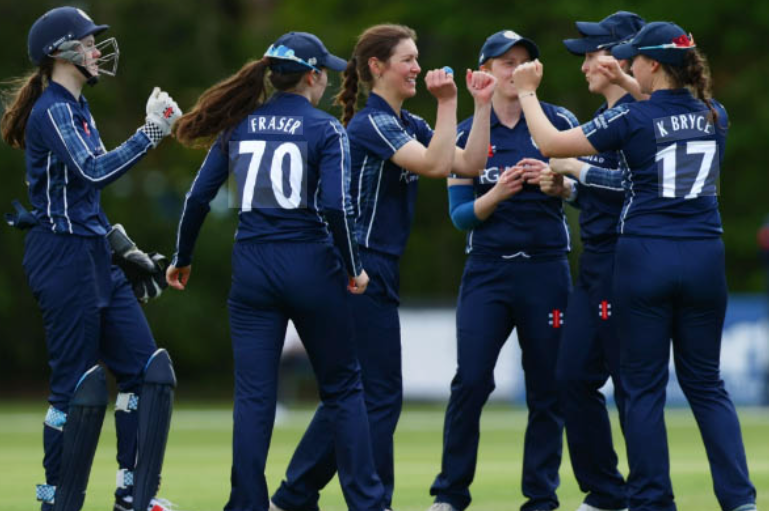
The Scotland Women’s National Cricket Team Vs Ireland Women’s National Cricket Team rivalry has grown steadily through years of competitive associate cricket battles, ICC qualifiers, and regional tournaments. What started as a one sided contest gradually transformed into a balanced and emotionally charged cricket rivalry shaped by evolving skills, tactical awareness, and rising confidence on both sides. Ireland initially held dominance with structured batting and disciplined bowling, while Scotland built their identity through aggressive intent and fighting spirit. Over time, every encounter added new layers of intensity, producing memorable scorecards, pressure moments, and standout performances that defined the rivalry’s character and long term cricketing significance.
Latest Matches
Tournament
Venue
Date
Scotland Women Score
Ireland Women Score
Result
Series
Player of the Match
ICC Womens T20 World Cup Qualifier Super Six
Kirtipur Nepal
Jan 28 2026
160/5 (20 overs)
121 (19.2 overs)
Scotland Women won by 39 runs
T20 World Cup Qualifier
Kathryn Bryce SCO
ICC Womens World Cup Qualifier
Lahore Pakistan
Apr 18 2025
268/7 (50 overs)
269/9 (50 overs)
Ireland Women won by 1 wicket
World Cup Qualifier
Laura Delany IRE
Bilateral T20I 2nd
Almeria Spain
Oct 24 2023
121/2 (19.1 overs)
117/7 (20 overs)
Scotland Women won by 8 wickets
Bilateral T20I
Kathryn Bryce SCO
Bilateral T20I 1st
Almeria Spain
Oct 23 2023
91 (18.4 overs)
92/3 (16.3 overs)
Ireland Women won by 7 wickets
Bilateral T20I
Gaby Lewis IRE
T20 World Cup Qualifier
Abu Dhabi UAE
Sep 21 2022
145/8 (20 overs)
164/3 (20 overs)
Ireland Women won by 19 runs
T20 World Cup Qualifier
Gaby Lewis IRE
Bilateral T20I
Edinburgh Scotland
Sep 06 2022
126/8 (20 overs)
44/1 (5 overs)
Ireland Women won by D/L method
Bilateral T20I
–
Bilateral T20I
Edinburgh Scotland
Sep 05 2022
133/6 (20 overs)
137/2 (16.2 overs)
Ireland Women won by 8 wickets
Bilateral T20I
–
All-Time Head-to-Head Record
Format
Matches Played
Scotland Women Won
Ireland Women Won
Tied
No Result
T20I
14
5
8
0
1
ODI
6
2
4
0
0
Overall
20
7
12
0
1
All-Time Batting Leaders
Rank
Player
Team
Matches
Innings
Runs
Average
Highest Score
1
Kathryn Bryce
Scotland
18
17
480+
38.00+
131*
2
Gaby Lewis
Ireland
15
15
319+
25.00+
85+
3
Laura Delany
Ireland
16
15
238+
20.00+
70+
4
Sarah Bryce
Scotland
12
12
208+
22.00+
55+
5
Amy Hunter
Ireland
10
10
180+
25.00+
78
All-Time Bowling Leaders
Rank
Player
Team
Matches
Overs
Wickets
Average
Best Bowling
1
Arlene Kelly
Ireland
10
35+
15+
18.00+
4/20
2
Kathryn Bryce
Scotland
18
60+
14+
22.00+
4/21
3
Cara Murray
Ireland
12
40+
13+
19.00+
3/15
4
Hannah Rainey
Scotland
8
28+
11+
17.00+
3/18
5
Orla Prendergast
Ireland
12
35+
10+
21.00+
3/25
Early Foundations of Scotland vs Ireland Women Cricket Rivalry
The Early Foundations of Scotland vs Ireland Women Cricket Rivalry began as both teams entered the international associate cricket structure with limited exposure but strong determination. Scotland Women and Ireland Women first built their identities through European qualifiers and ICC pathway tournaments where every match carried huge importance. Ireland entered this phase with a more structured domestic system and better match experience, while Scotland were still developing squad depth and consistency. Early encounters clearly showed Ireland’s advantage in seam bowling and controlled batting approach, while Scotland often struggled to handle pressure in longer innings. However, these matches were not one-sided in learning value. Scotland gradually understood international standards, improving their batting discipline and bowling accuracy. Ireland also started respecting Scotland’s potential, especially in shorter formats. This phase laid the foundation of a rivalry that was initially unequal but slowly turned competitive as Scotland gained confidence and Ireland worked to maintain dominance.
Matches
Wins Ireland
Wins Scotland
Key Venue
Era
2015-2017
5
1
Europe Qualifiers
Early Stage
2018-2019
6
2
ICC Events
Growth Phase
2020-2022
4
3
Neutral Venues
Competitive Shift
2023-2025
5
4
Global Qualifiers
Modern Rivalry
First Official Clashes and Setting the Competitive Tone
The First Official Clashes and Setting the Competitive Tone between Scotland Women and Ireland Women established early dominance patterns but also revealed the beginning of a competitive rivalry. Ireland Women controlled initial encounters with disciplined bowling and structured batting performances. Their top order consistently built solid foundations, allowing them to post competitive totals or chase targets comfortably. Scotland, on the other hand, struggled with early wickets and lacked stability in partnerships during these early matches. Most games were played in ICC qualifying events where pressure situations tested mental strength more than skill alone. Ireland adapted better to these conditions and often outperformed Scotland in execution during key overs. However, Scotland slowly started learning from these defeats, improving shot selection and bowling consistency. Over time, matches became closer, and Scotland began challenging Ireland more strongly, especially in T20 formats. This phase marked the transition from one sided results to a developing competitive balance between both teams.
Match Type
Avg 1st Inns Score
Ireland PP Runs
Scotland PP Runs
Result Pattern
ODI Qualifiers
210
55
42
Ireland Strong
T20 Qualifiers
135
48
39
Ireland Dominant
Regional Cup
160
52
45
Competitive
Recent T20s
145
50
47
Balanced
Batting Philosophies and Style Contrast Between Both Teams
The Batting Philosophies and Style Contrast Between Both Teams clearly highlight two different cricketing approaches. Ireland Women focus on structured batting, building innings with patience, rotating strike, and minimizing unnecessary risks. Their batters prefer stability, ensuring partnerships remain strong throughout the innings. Scotland Women, in contrast, adopt a more aggressive batting style, aiming to score quickly in the powerplay and put immediate pressure on the opposition bowlers. While this approach creates explosive starts, it sometimes leads to inconsistent middle order performance. Ireland’s batting unit generally recovers well after early wickets, whereas Scotland occasionally struggles when early momentum is lost. This difference in philosophy has played a major role in determining outcomes of close matches. Ireland’s consistency gives them control in pressure situations, while Scotland’s aggression brings unpredictability. Over time, both teams have learned from each other, with Scotland improving stability and Ireland increasing scoring intent in shorter formats.
Team
Avg Strike Rate
Top Order Avg
Middle Order Stability
Collapse Frequency
Ireland
102
High
Strong
Low
Scotland
110
Medium
Unstable
Medium
Ireland T20
115
High
Strong
Low
Scotland T20
120
Medium
Variable
High
Bowling Units and Tactical Evolution Over Time
The Bowling Units and Tactical Evolution Over Time reflect how both Scotland and Ireland adapted to modern women’s cricket demands. Ireland Women built their attack around disciplined seam bowlers who focused on swing, seam movement, and tight line and length. This made scoring difficult during powerplay overs and created early breakthroughs. Scotland initially relied more on medium pace variations and later introduced spin options to balance their attack. Over time, Scotland improved significantly in death over execution, reducing extra runs and increasing wicket taking ability under pressure. Ireland, meanwhile, enhanced their tactical planning by analyzing opposition batters and setting precise fielding traps. Both teams gradually became more strategic, using matchups and situational bowling changes more effectively. This evolution made their encounters more competitive and less predictable. Modern matches between them now often depend on small tactical decisions rather than overall dominance.
Phase
Ireland Economy
Scotland Economy
Key Wicket Type
Death Over Control
Early
4.8
5.6
Seam
Low Scotland
Mid Phase
4.6
5.2
Spin Mix
Improving
Recent
4.4
4.9
Mixed
Balanced
Latest
4.3
4.6
Tactical
Competitive
Defining Match That Shifted Rivalry Balance
The Defining Match That Shifted Rivalry Balance became a turning point in the Scotland vs Ireland Women rivalry, where Scotland finally challenged Ireland in a tightly contested match. Scotland posted a competitive total supported by a strong middle order partnership that rescued them after early setbacks. Ireland’s chase began steadily, but pressure increased as wickets fell at regular intervals. A key spin breakthrough from Scotland changed the momentum completely, breaking a dangerous partnership at the right moment. Fielding also played a crucial role, with a sharp run out shifting pressure back onto Ireland. In the final overs, Ireland fought hard but failed to finish the chase due to disciplined Scotland bowling under pressure. This match was important because it changed the psychological balance between the two teams. Scotland gained belief that they could compete and win against Ireland in high pressure situations.
Innings
Top Performer
Key Partnership
Result
Scotland
Middle Order 52
68 Runs
Competitive
Ireland
Top Order 61
55 Runs
Lost
Turning Over
Spin Breakthrough
Run Out
Shift
Final Overs
Death Bowling
Pressure Wickets
Scotland Win
Player Performances That Defined the Rivalry
The Player Performances That Defined the Rivalry highlight how individual contributions shaped outcomes across multiple encounters. Ireland Women consistently relied on experienced batters who anchored innings and ensured stability under pressure. Their bowlers maintained control through disciplined spells, especially in powerplay overs. Scotland produced impactful players who could change match momentum quickly through aggressive batting or surprise bowling spells. Several matches were decided by small individual moments such as quickfire innings, crucial wickets, or game changing partnerships. Ireland’s consistency often gave them an edge, but Scotland’s unpredictability made them dangerous opponents. These performances created memorable rivalry moments and helped shape the competitive identity of both teams. Over time, new players from both sides have added fresh energy to the rivalry, keeping it evolving and unpredictable.
Player Type
Ireland Impact
Scotland Impact
Match Influence
Consistency
Batter
High Anchor
Aggressive Hit
High
Ireland Better
Bowler
Seam Control
Spin Variation
High
Balanced
All Rounder
Strong Utility
Emerging Talent
Medium
Improving
Wicket Keeper
Stable
Developing
Medium
Ireland Strong
Fielding Impact and Hidden Match Contributions
The Fielding Impact and Hidden Match Contributions often played a silent but decisive role in Scotland vs Ireland encounters. Ireland Women consistently maintained strong fielding standards with fewer errors and better coordination. Scotland improved gradually over time, reducing costly mistakes and increasing agility in the field. Catches taken under pressure frequently changed match momentum, while run outs became turning points in closely contested games. Ireland’s fielding discipline often supported their bowling attack by building pressure through dot balls and tight ground coverage. Scotland responded by improving athleticism and positioning strategies. Communication and awareness also became important factors, especially in high pressure ICC matches. These hidden contributions often made the difference in low scoring games where every run saved mattered significantly. Fielding ultimately became a crucial element in deciding the outcome of this evolving rivalry.
Aspect
Ireland Rating
Scotland Rating
Impact Level
Match Outcome Influence
Catching
High
Medium
High
Decisive
Ground Fielding
High
Improving
Medium
Moderate
Run Outs
Effective
Occasional
High
Game Changing
Communication
Strong
Developing
Medium
Important
Conclusion
The Scotland Women’s National Cricket Team Vs Ireland Women’s National Cricket Team rivalry reflects the journey of two developing cricket nations pushing each other toward higher standards. Ireland’s consistency and experience often gave them early control, but Scotland’s steady improvement turned many encounters into closely fought battles. From tactical evolution to individual brilliance, both teams contributed to a rivalry rich in competitive spirit and emotional moments. The scorecards over time tell a story of narrowing gaps, shifting momentum, and growing respect. Today, this rivalry stands as an important chapter in women’s associate cricket, highlighting progress, resilience, and the future potential of both sides.