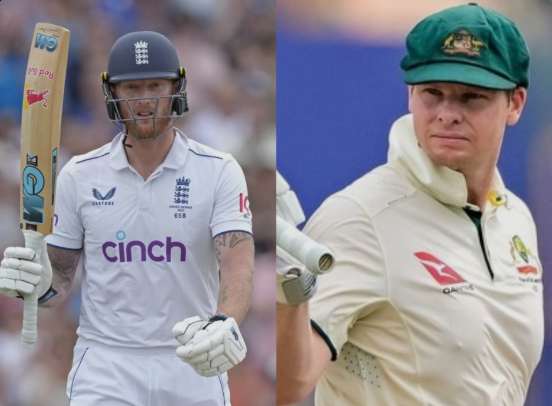
The rivalry between the England Cricket Team and the Australian Men’s Cricket Team is not just a contest it’s a legacy written across generations. Known globally as The Ashes, this battle blends pride, history, and unforgettable drama, making it the heartbeat of Test cricket and one of sport’s most iconic rivalries.
Recent Matches Table
Date
Format
Venue
Result
8 Jan 2026
Test
Sydney
Australia won by 5 wickets
27 Dec 2025
Test
Melbourne
England won by 4 wickets
21 Dec 2025
Test
Adelaide
Australia won by 82 runs
7 Dec 2025
Test
Brisbane
Australia won by 8 wickets
22 Nov 2025
Test
Perth
Australia won by 8 wickets
22 Feb 2025
ODI
Lahore
Australia won by 5 wickets
29 Sep 2024
ODI
Bristol
Australia won by 49 runs (DLS)
27 Sep 2024
ODI
London
England won by 186 runs
Top 5 Standout Performances Table
Player
Team
Performance Type
Detail
Don Bradman
Australia
Most Career Runs (Ashes)
5,028 runs
Jim Laker
England
Best Bowling (Match)
19 wickets for 90 runs
Shane Warne
Australia
Most Career Wickets
195 wickets
Ian Botham
England
All-Round Performance
149* & 6/95 (1981)
Steve Smith
Australia
Series Dominance
774 runs (2019 Series)
Year-wise Key Matches Timeline Table
Year
Key Event / Match
Winner
Significance
1877
First Ever Test Match
Australia
Start of Test cricket history
1882
The Oval Test
Australia
Origin of “The Ashes” term
1932
Bodyline Series
England
Tactical shift in bowling
1948
The Invincibles
Australia
Unbeaten tour of England
2005
Greatest Series
England
England wins after 18 years
2019
Headingley Thriller
England
Ben Stokes’ famous 135*
2023
Ashes Series
Draw (2-2)
First drawn series since 2019
2025
Ashes Series
Australia
Australia wins series 4-1
Biggest Wins & Closest Matches Table
Event Type
Winner
Margin
Match Date
Biggest Win (Runs – Test)
England
675 runs
30 Nov 1928
Biggest Win (Innings – Test)
Australia
Innings & 579 runs
20 Aug 1938
Biggest Win (Runs – ODI)
England
242 runs
19 Jun 2018
Biggest Win (Runs – ODI)
Australia
221 runs
22 Nov 2022
Closest Match (Test)
England
2 runs
7 Aug 2005
Closest Match (Test)
Australia
1 run
20 Jan 1902
Closest Match (ODI)
England
2 wickets
14 Jan 1987
Closest Match (T20I)
Australia
2 runs
29 Aug 2013
The Spark That Lit the Fire (1877–1890)
The story begins in 1877 with the first-ever Test match in Melbourne, where Australia stunned England. But the true turning point came in 1882 at The Oval, when England’s shocking defeat led to the famous “death of English cricket” obituary, birthing The Ashes. This era was raw and emotional, with both teams discovering the intensity of international competition. Australia initially gained the upper hand, but England quickly fought back, setting the tone for a rivalry built on revenge and redemption. These early clashes were less about statistics and more about identity, as two cricketing nations carved their legacy.
Year
Event
Winner
Venue
1877
First Test Match
Australia
Melbourne
1882
The Oval Test
Australia
England
1884
Ashes Series
England
England
Battle for Supremacy: Pride and Power (1891–1939)
As cricket evolved, so did the rivalry. The early 20th century saw intense battles fueled by national pride. England and Australia exchanged dominance, with both sides producing exceptional players and tactical innovations. The infamous 1932 Bodyline series became a defining moment, showcasing how far teams would go to win. The rivalry was no longer just sport—it became a psychological contest. Stadiums filled with passionate fans, and every match carried immense pressure. This period elevated The Ashes into a global spectacle, embedding it deeply into cricket culture.
Year
Series/Event
Winner
Highlight
1902
Ashes
Australia
Close Contest
1928
Ashes
Australia
Dominant Tour
1932
Bodyline Series
England
Controversial Tactics
Post-War Dominance: Australia’s Golden Run (1945–1970)
After World War II, Australia entered a golden era, dominating England with remarkable consistency. Their powerful batting and lethal bowling attacks made them nearly unbeatable, especially at home. England struggled to match this level of performance, though occasional victories kept the rivalry alive. This period was defined by Australia’s authority, as they set new standards in international cricket. Despite the imbalance, the rivalry retained its intensity, with England constantly striving to reclaim lost pride. These years reinforced Australia’s dominance while keeping the competitive spirit alive.
Year
Series
Winner
Highlight
1948
Ashes
Australia
“Invincibles” Tour
1953
Ashes
England
Regained Urn
1960s
Multiple Series
Australia
Continued Dominance
The Revival Era: Heroes and Historic Moments (1971–2005)
This era reignited the rivalry with unforgettable performances and dramatic matches. England and Australia traded victories, creating a balanced and thrilling contest. The 1981 Ashes, highlighted by heroics from Ian Botham, became legendary. The rivalry reached new heights in 2005 when England secured a historic Ashes win in one of the greatest series ever played. Matches were fiercely competitive, often decided by narrow margins, capturing global attention. This period transformed the rivalry into a modern sporting spectacle, blending tradition with excitement.
Year
Event
Winner
Highlight
1977
Ashes
Australia
Strong Comeback
1981
Ashes
England
Botham’s Heroics
2005
Ashes
England
Iconic Series
Modern Warfare: Strategy, Skill, and Pressure (2006–2019)
In the modern era, the rivalry evolved with advanced strategies, analytics, and high-pressure cricket. Australia’s dominance in 2006–07 showcased their strength, while England’s comeback in 2010–11 proved their resilience. The 2019 Ashes ended in a dramatic draw, highlighting how evenly matched the teams had become. Players faced intense scrutiny, and every match was analyzed globally. This period emphasized professionalism and consistency, with both teams striving for excellence across formats. The rivalry remained fierce, adapting to the changing landscape of cricket while preserving its historic intensity.
Year
Series/Event
Winner
Highlight
2006–07
Ashes
Australia
Whitewash
2010–11
Ashes
England
Away Victory
2019
Ashes
Draw
Dramatic Finish
Legends Who Wrote the Story
No rivalry is complete without its heroes. England’s legacy includes players like Joe Root, while Australia boasts legends such as Don Bradman and Ricky Ponting. These cricketers defined eras, delivered match-winning performances, and created unforgettable memories. Their contributions elevated the rivalry beyond competition, turning it into a celebration of excellence. Each generation adds new heroes, ensuring the story continues to evolve.
Player
Team
Era
Contribution
Don Bradman
Australia
1930s–40s
Legendary Batting
Ian Botham
England
1980s
All-round Hero
Ricky Ponting
Australia
2000s
Leadership
Joe Root
England
Modern Era
Consistency
The Future: A Rivalry That Never Fades
Looking ahead, the England vs Australia rivalry shows no signs of slowing down. With emerging talent and evolving strategies, future Ashes series promise even greater excitement. Both teams continue to develop world-class players, ensuring high-quality contests. The rivalry remains a symbol of cricket’s heritage, blending history with modern innovation. As new chapters are written, the spirit of competition, pride, and passion will continue to define this legendary battle.
Aspect
England
Australia
Impact
Strength
Batting Depth
Aggressive Play
Elite Rivalry
Challenge
Consistency
Overseas Conditions
Close Matches
Future
Emerging Talent
Strong System
Iconic Battles
Conclusion
The timeline of the England Cricket Team vs Australian Men’s Cricket Team rivalry is a journey through cricket’s rich history. From the birth of The Ashes to modern-day battles, this rivalry has delivered unforgettable moments and legendary performances. It represents more than just competition—it reflects tradition, pride, and the evolution of the sport. As both teams continue to compete, their encounters promise to remain among the most anticipated in cricket. This enduring rivalry stands as a testament to the spirit of the game, inspiring players and fans while shaping the legacy of international cricket for generations to come.